In an effort to squeeze the maximum conversion out of traffic, media buyers often use aggressive marketing techniques on landing pages. However, what works brilliantly for conversion in other traffic sources can become a direct path to an account ban in Google Ads for Misrepresentation or Circumventing Systems.
It is important to make an essential disclaimer right away: the call-to-action “Buy now”, a genuine discount timer, or authentic social proof are not automatic violations in themselves. The problem arises when marketing crosses the line into manipulation and relies on false claims, artificial urgency, and outright deception of the user.
Based on our team’s practical experience, let’s examine which triggers most frequently trip Google’s moderation algorithms and how to use them correctly without wasting your budget.
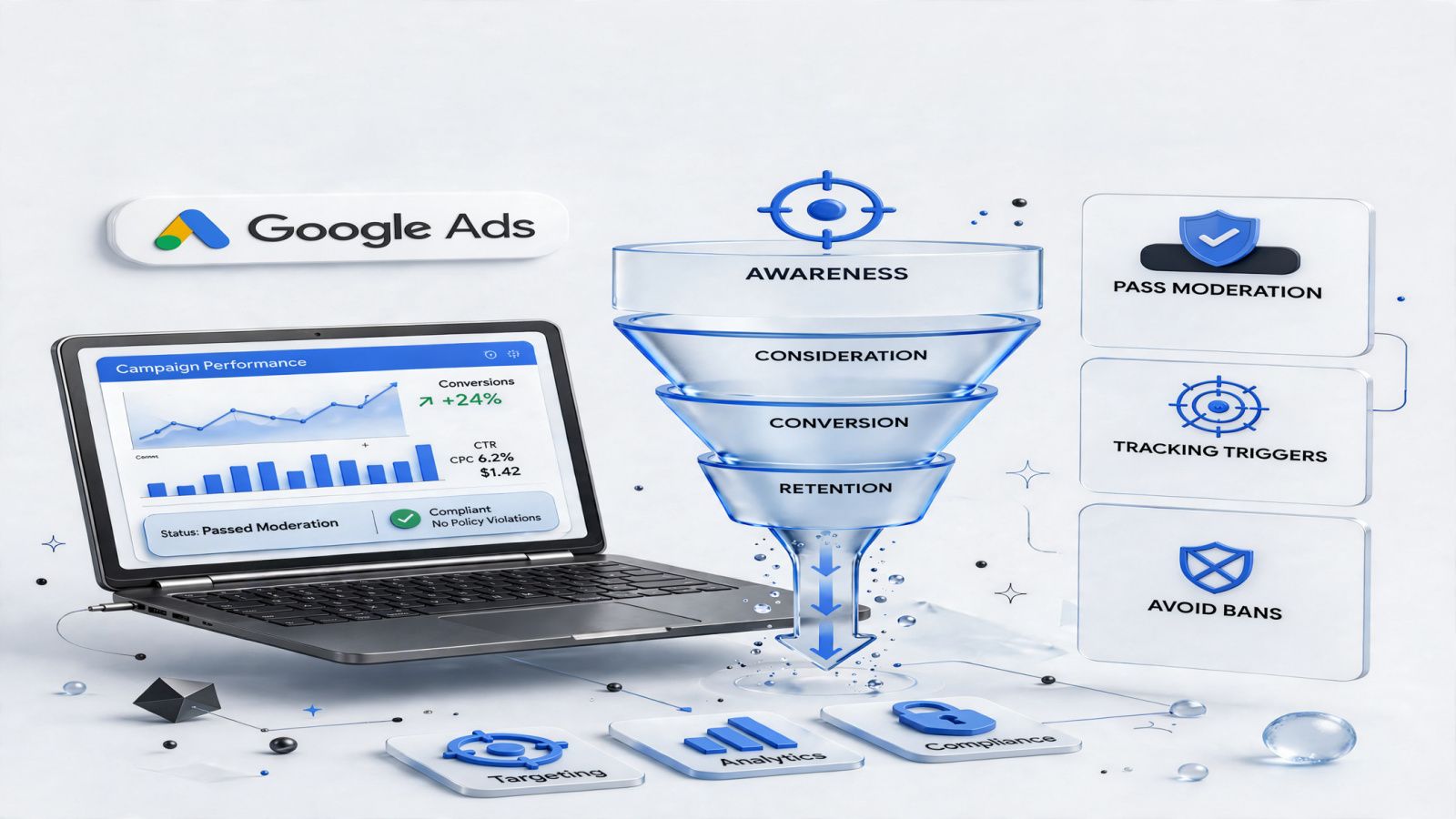
1. Where the Line Lies Between Marketing and Google Policy Violations
Google Ads policy prohibits promoting content that misleads users regarding products, services, or the terms under which they are obtained. If a bot moderator or human reviewer visits your landing page and sees artificially inflated counters, fake stock levels, or unrealistic guarantees, the account will be banned with no right to appeal.
Below, we break down specific triggers that raise the most concerns during moderation.
2. Breakdown of Key Triggers: Normal vs. Violation
Artificial Urgency and Timers
- What is used: Phrases like “Last chance”, “Today only”, “Buy right now”, as well as dynamic countdown timers.
- Where the risk lies: If the timer resets on every page reload and starts counting down from scratch (e.g., there is always exactly 2 hours and 14 minutes left until the promotion ends), this is a classic example of manipulation.
- How to do it right: Use real promotions with a fixed end date (if the offer is genuinely time-limited) or avoid fake timers, replacing them with a fair Call to Action that does not deceive the user.
False Scarcity and Fake Notifications
- What is used: Pop-ups like “5 people just bought this product” or badges saying “Only 2 items left in stock”.
- Where the risk lies: If these figures are generated by a random script on an empty site with zero sales, verification algorithms (and sometimes user complaints) quickly catch the discrepancy with reality.
- How to do it right: Display real inventory data or avoid dynamic purchase notifications if they are fabricated.
Manipulation via “Herd Mentality”
- What is used: Community triggers such as “Everyone is already with us, you’re the only one who hasn’t tried it yet” or playing on Fear of Missing Out (FOMO).
- Where the risk lies: In moderate doses, this is standard copywriting. But combined with aggressive promises, moderation may view it as psychological pressure and misrepresentation.
Fabricated Social Proof
- What is used: Fake reviews with fictitious names and stock photos, fabricated case studies with guaranteed earnings or cures.
- Where the risk lies: In verticals with strict moderation (Nutra, Finance, Crypto), fake reviews with unrealistic results (“lost 20 kg in 3 days without effort”) are trigger number one for bans.
- How to do it right: Avoid absolute guarantees and extreme figures in reviews. Use legal disclaimers explaining that results may vary.
Overly Strong Result Promises
- What is used: Promises of 100% guaranteed results, instant healing, or guaranteed passive income.
- Where the risk lies: A direct violation of Google’s advertising policies (Misleading claims). The system does not tolerate categorical statements in areas affecting user health, finances, or safety.
3. The Cumulative Effect: Why Landing Pages Get Banned
Often, a single element (such as a “50% Discount” badge) does not raise questions with a moderator. However, trouble arises when a landing page is overloaded with multiple triggers combined:
Typical mistake: A single page simultaneously features:
- An endlessly resetting timer.
- Pop-ups stating “Ivan from Kyiv just bought the product”.
- A badge reading “Only 1 item left”.
- Over-the-top text promises like “100% earnings guarantee in 1 day”.
To Google’s algorithms, this combination looks like a classic scam page or a high-risk resource for users, which almost guarantees a ban (Circumventing Systems or Misrepresentation).
4. Recommendations from Our Team
- Moderation Above All: Use calls to action, but keep them honest. A “Buy Now” button is standard marketing. A fake buyer pop-up every 5 seconds is a circumvention risk.
- Inspect the Landing Page Through a Moderator’s Eyes: Before launching an ad campaign, open your landing page and ask yourself: “If a user encounters this timer or promise, will they feel deceived?”
- Abandon Toxic Scripts: Avoid fake activity scripts that are easily detected by modern advertising platform security scanners.