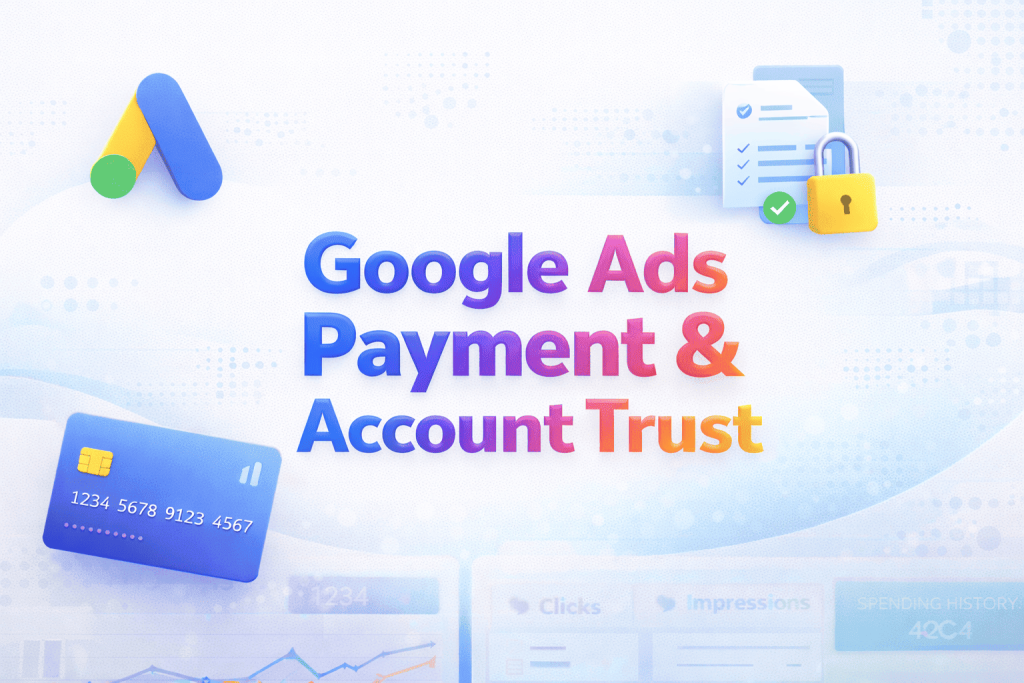
Google Ads is not only about campaign structure, keywords, and landing pages. Billing setup, payment profile consistency, and advertiser verification are some of the most important factors that influence account trust and long-term advertising stability. Even a well-built campaign can face limitations, delayed approvals, or delivery issues if Google detects risk signals related to billing or advertiser identity. Google evaluates not only the ads themselves but also whether the advertiser appears real, transparent, and financially consistent. The stronger the trust profile of the account, the more stable ad delivery tends to be.
Understanding how Google Ads billing works, what affects advertiser trust, and how payment verification is handled can help businesses avoid unnecessary restrictions and build a more reliable PPC system.
🔐 How Google Evaluates Account Trust
Google analyzes multiple signals connected to payments, verification, and advertiser identity. The system is designed to determine whether an account appears to belong to a real business operating with consistent and verifiable information.
Important trust signals include the advertiser name, country, currency, payment profile details, and the overall consistency of account information. If these details change too often or do not match each other, the account may appear risky and trigger additional checks. Google’s verification documentation also stresses that submitted documents and payments profile information should match exactly.
Payment history also plays a major role. Accounts with successful, regular payments are generally viewed as more stable than accounts with repeated failed charges, unusual billing changes, or payment verification problems. Google explicitly states that suspicious payment activity can lead to spend limits or account suspension.
🧾 Advertiser Verification: Why It Matters
Advertiser verification is the process Google uses to confirm the identity of the individual or company running ads. Depending on the case, Google may ask for documents that verify identity, address, business registration, or payment details. Google says all advertisers will eventually be required to complete advertiser verification as part of its transparency efforts, and some ads may be restricted until the process is completed.
The purpose of verification is simple: Google wants to confirm that the advertiser is a legitimate and transparent participant in the advertising ecosystem. Once verification is completed successfully, the account generally has a stronger trust profile and fewer transparency-related barriers.
A delay in verification, incomplete documents, or mismatched information can slow down approvals and, in some cases, temporarily interrupt ad delivery. Google also documents a payment-method verification flow that may require a temporary code-based charge to confirm the payment method.
⚠️ Common Mistakes That Reduce Trust in Google Ads
One of the most common mistakes is changing payment methods too often. Frequent billing changes can look abnormal to the system, especially if they happen together with edits to account identity, business information, or campaign behavior.
Another issue is inconsistency between the Google Ads account, the website, and the payment details. If the business name, country, or payer details do not align across the account and supporting documents, Google may require extra verification or review. Official documentation specifically notes that documents should use the same full name and match the payments profile information.
Unstable payment history is also a negative signal. Failed charges, declined cards, unpaid balances, or repeated billing interruptions can reduce account trust and affect campaign continuity. In addition, incomplete advertiser information or vague business details can weaken credibility and make the account look less transparent.
For advertisers who want to avoid launching from a completely cold setup, some businesses choose spending accounts with established billing history and prior ad activity. From an operational perspective, this can create a smoother starting point when the goal is to work from an account environment with stronger historical trust signals.
💳 How to Set Up Billing for Stable Performance
A reliable billing setup starts with accurate and real advertiser information. The payment profile, business identity, website details, and account information should align as closely as possible. This reduces friction during verification and lowers the chance of additional billing reviews.
It is also wise to use one stable payment method instead of rotating cards or payment profiles without a strong reason. Consistent, successful payments help form a cleaner billing history over time. If Google requests payment verification, the process should be completed quickly and carefully using valid documents and accurate profile details. Google’s help pages explain that payment verification may be requested both during signup and later when setting up or confirming a primary payment method.
Before scaling campaigns, advertisers should review the account’s billing configuration, payer details, country, and business identity. A clean billing foundation supports better ad account stability and more predictable campaign delivery.
📈 The Role of Account History and Gradual Growth
Google does not evaluate only the current state of the account. It also considers historical behavior. Accounts that grow gradually, maintain stable billing behavior, and avoid abrupt disruptive changes tend to build stronger trust over time.
Sharp changes in budget, billing details, identity data, or account ownership can trigger extra checks. Gradual development, predictable payment behavior, and operational consistency usually support a more stable reputation inside the platform.
This is one reason why some advertisers also work with farmed accounts that have already gone through a warm-up period with controlled activity patterns. In practice, such accounts may provide a more stable base for launching campaigns than a brand-new account with no operational history.
🛑 What Happens During Reviews and Restrictions
If Google detects potential risk factors, the account may go through an additional review. During this period, ad serving may be limited, delayed, or temporarily paused. These checks are intended to confirm that the advertiser, billing setup, and payment activity meet Google Ads requirements.
Google documents that some accounts may be paused until payment information is verified or a requested payment is completed. It also states that ads may be restricted until advertiser verification is finished within the required timeline.
These situations do not always mean a permanent problem, but they can interrupt campaign momentum and create avoidable delays. The best defense is accurate data, transparent business information, and a stable payment setup from the beginning.
🧠 How to Prepare an Account in Advance
The best way to avoid billing and verification issues is to prepare the account correctly before aggressive scaling begins. Use real advertiser information, maintain a consistent payment method, verify requested details promptly, and make sure your account information matches your website and official documents.
It is also important to monitor the consistency of your business identity across the payment profile, billing settings, and any submitted verification documents. Small mismatches can create friction during review. Google specifically advises that documents be current, legible, and consistent with the advertiser’s submitted details.
This type of disciplined setup creates a stronger trust profile and supports more stable Google Ads campaign performance over the long term.
✅ Conclusion
Payment information, billing consistency, and advertiser verification play a major role in Google Ads account stability. A reliable payment method, transparent business data, and a gradual account development strategy form the foundation of sustainable advertising performance.
Accounts with stronger trust signals are better positioned to pass reviews faster, face fewer billing-related interruptions, and maintain more stable campaign delivery. In Google Ads, trust is not built by campaigns alone. It is built through clean billing behavior, accurate verification, and disciplined account management.