A lot of advertisers choose accounts too simplistically. They look at labels like new, aged, or spend-history and assume that is enough to make the right launch decision.
But in real media buying, that is only part of the picture 👀
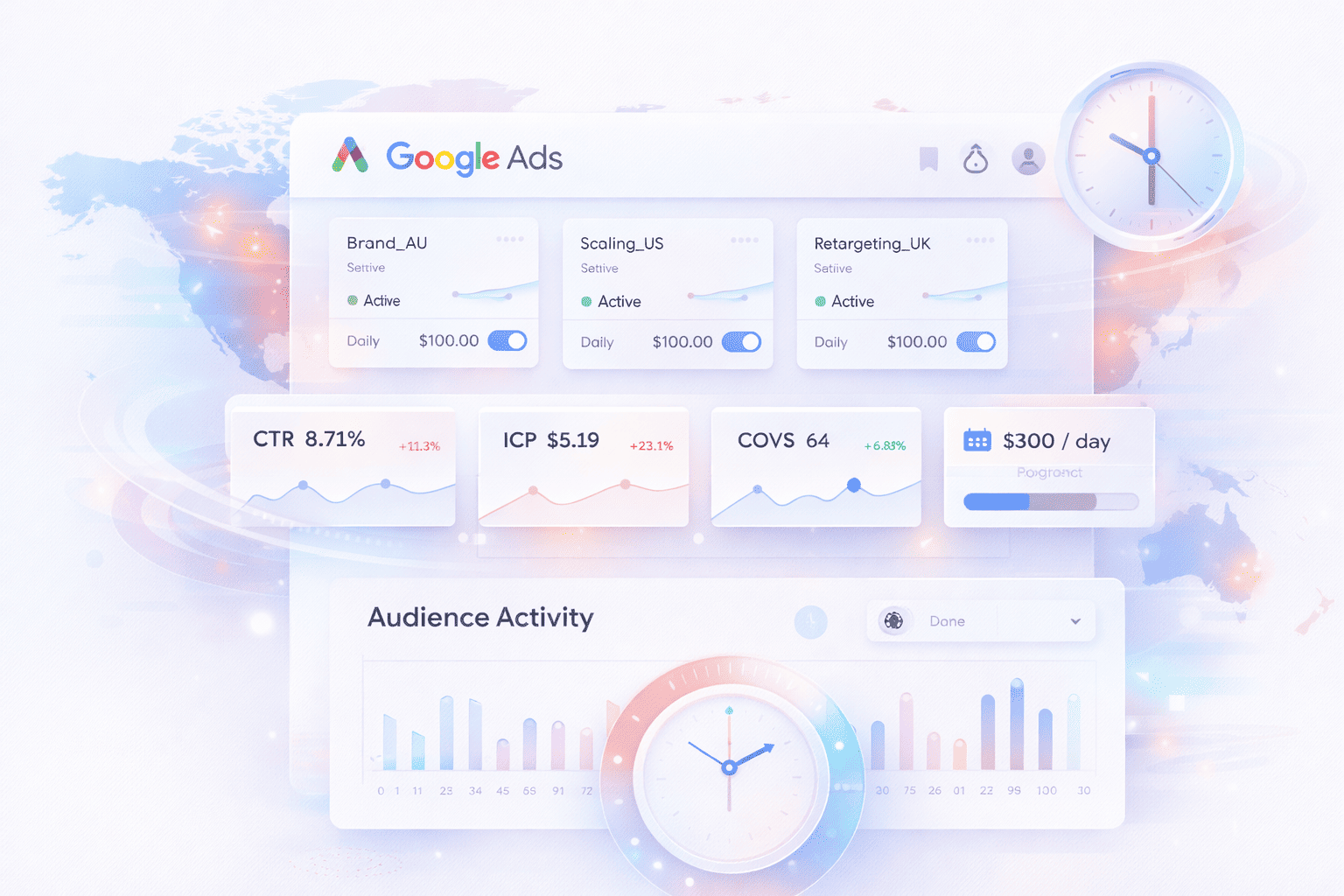
When you run campaigns in different GEOs, the account is not just a shell for spending budget. It is tied to launch timing, traffic rhythm, team availability, reporting windows, and optimization speed. That is why matching an account to the right market and time zone is not a minor detail — it is an operational decision.
If the match is weak, even a solid setup can become harder to control. Launches happen at the wrong time, key signals come in while the team is offline, and decisions get delayed. That is how a manageable campaign turns into a messy one.
What Really Matters When Matching an Account to GEO ⚙️
1. Audience Activity Hours ⏰
Every GEO has its own traffic rhythm. Users do not search, click, and convert evenly throughout the day. Some markets show stronger commercial intent in the morning, others heat up later, and some peak during evening hours.
That means one simple thing:
- the same campaign logic will behave differently across different time zones
- the first hours after launch may be more or less valuable depending on the market
- a campaign can look weak simply because it started outside the most useful traffic window
When choosing an account for a GEO, it is worth asking whether the account timing lines up with the moments when that market is actually active.
2. Team Working Schedule 👨💻
This is one of the most overlooked parts of launch logic.
A GEO may look attractive on paper, but if the most important campaign signals start appearing when your team is asleep, your control drops immediately. That affects:
- launch monitoring
- first-day optimization
- budget pacing decisions
- reaction speed when something goes wrong
A good account-to-GEO match should make it easier for the team to stay in control, not harder.
3. First-Hour Optimization Window 📊
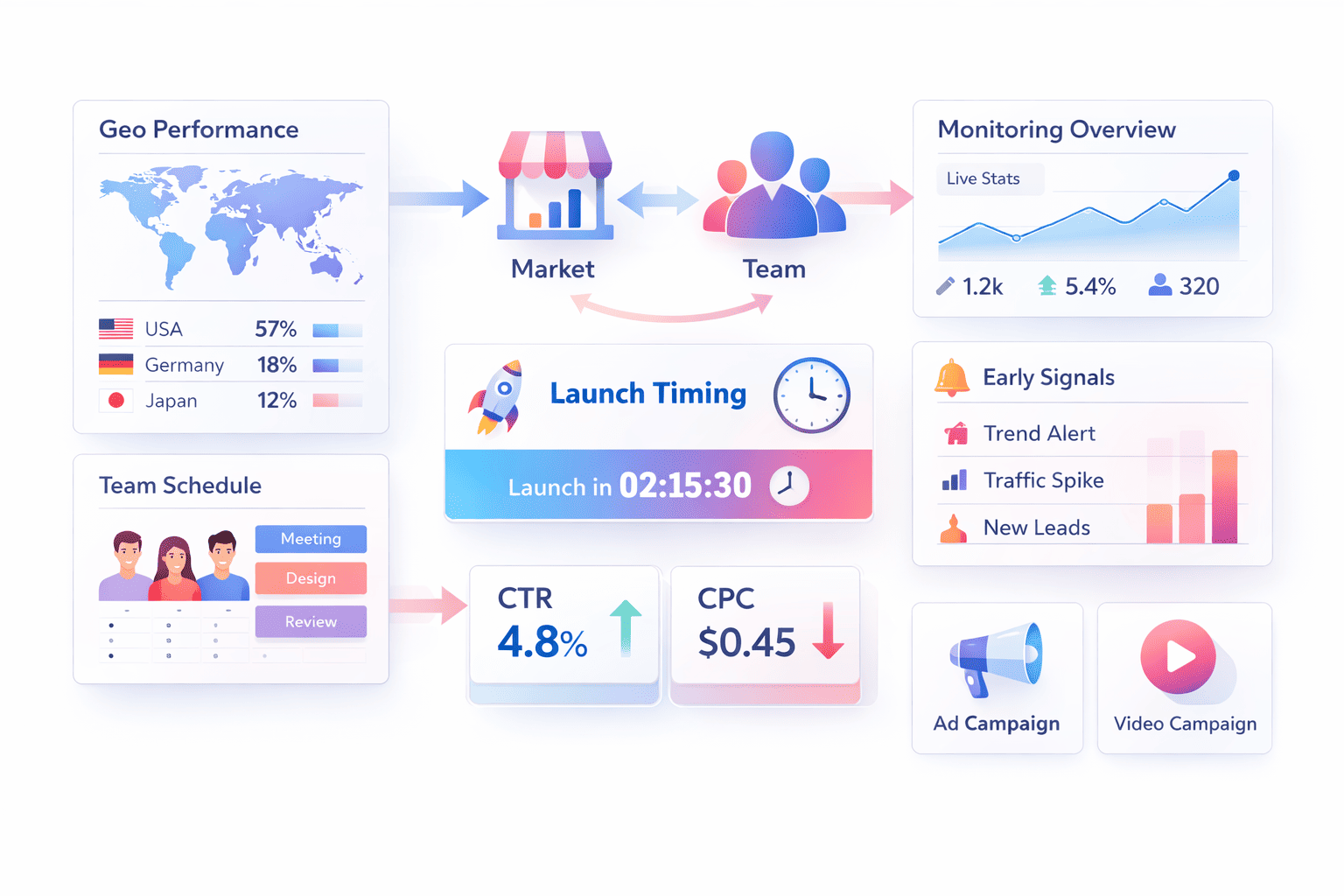
The first hours after launch often tell you a lot. This is when buyers usually want to watch:
- CTR
- click quality
- early CPC movement
- first conversion signals
- traffic consistency
If those signals come in during hours when no one is watching, the account may technically run the GEO — but operationally, the match is weak.
That is why experienced buyers do not just ask, “Can this account run this market?”
They ask, “Can we manage this market properly with this account?” 🎯
Practical GEO-by-GEO Matching Logic 🧠
1. If You Run Asia, Watch Time Alignment First 🌏
Asian GEOs often require tighter attention to time alignment. If the team launches from a completely different working window, then the first meaningful traffic and conversion signals may appear at the wrong time.
Here is what to watch:
- whether the account time zone aligns with the market’s active hours
- whether the team can monitor the first spend live
- whether bid or budget decisions will happen at awkward times
- whether resets and pacing checks become harder than they should be
If the campaign starts moving while the team is offline, optimization becomes slower and less precise.
2. If You Run Europe, Watch Segmentation and Overlap 🇪🇺
European GEOs can look easier to manage because the timing often feels more comfortable for many teams. But that can create a false sense of simplicity.
The real risks here are:
- grouping too many markets together
- missing local differences in traffic rhythm
- reading blended data too broadly
- scaling before quality patterns are clear
Europe often rewards cleaner segmentation more than people expect.
3. If You Run US or Tier-1, Watch Cost Pressure and Monitoring Windows 🇺🇸
Tier-1 traffic is usually less forgiving. If the account-to-GEO match is weak, the cost of bad timing shows up faster.
For these markets, it is worth checking:
- whether your team is online during the most expensive hours
- whether launches happen early enough to generate useful same-day data
- whether budget control stays sharp during peak traffic windows
- whether the account setup allows fast reaction before spend accelerates
In expensive auctions, weak timing becomes costly very quickly 💸
4. If You Run LATAM or Mixed GEO Flows, Watch Reporting Clarity 🌐
Mixed GEO structures often look efficient at first. But they can create confusion later, especially when different traffic patterns, working hours, and audience behaviors are blended together.
That usually affects:
- reporting clarity
- campaign comparisons
- quality control
- optimization speed
A setup may still run, but if the GEO logic becomes muddy, the buyer starts losing clean reads.
5. The Practical Rule for Buyers 🚀
The simplest rule is also the most useful:
- match the account to the market’s active hours
- match the setup to your team’s monitoring window
- match the launch timing to the moments when real decisions can be made
That is where operational control comes from.
A technically valid account is not always the right account. The better match is the one that gives your team visibility, speed, and clean management logic from the first hours of the launch.
Final Takeaway 🔥
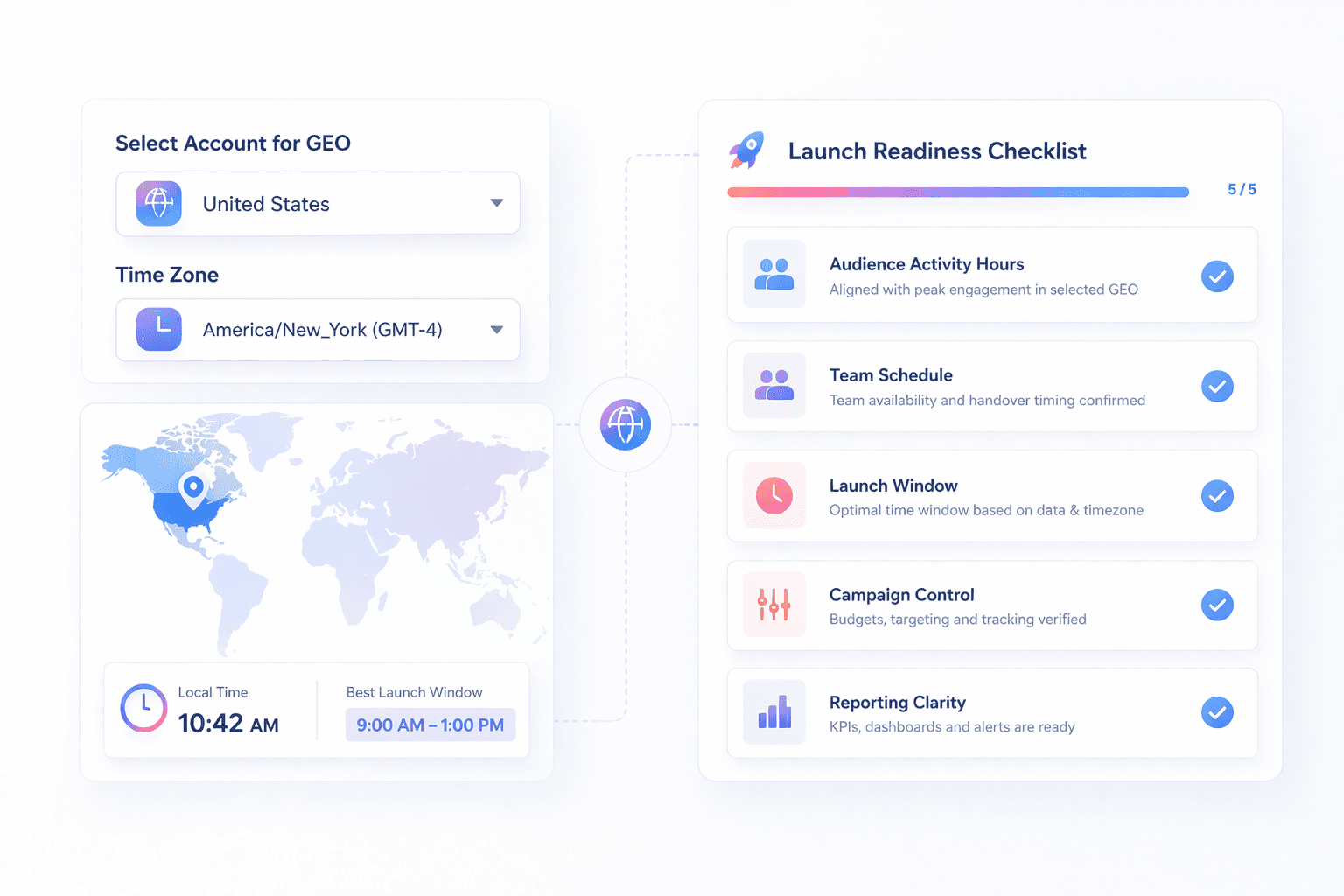
Matching an account to GEO is not only about geography. It is about traffic rhythm, team timing, launch control, and the ability to react while the data is still fresh.
That is why the best question is not:
“Can this account run this GEO?”
It is:
“Can this account and this team manage this GEO properly?” 👀
Because in media buying, the right account is not just the one that can spend — it is the one that gives you the best control over how that spend behaves.