
In one of my recent posts about regulation, I mentioned the UK and how offshore iGaming is getting squeezed there. It was already clear that deposits are becoming harder, trust in brands is dropping, and operator profits are stagnating.
But then I came across a detailed study based on transactional data from nearly 780,000 users over two years.
And that’s where it gets interesting.
This is not “opinions” or guesses — this is real data showing:
- how many new players actually enter the market
- how fast they churn
- and where the real competition is happening today
Working with real numbers always hits different 👀📊
New Players: Fewer Than It Looks 👀
The Market Is Not Growing Through New Users 📉
The analysis of 778,000+ players across 349 licensed brands showed something important:
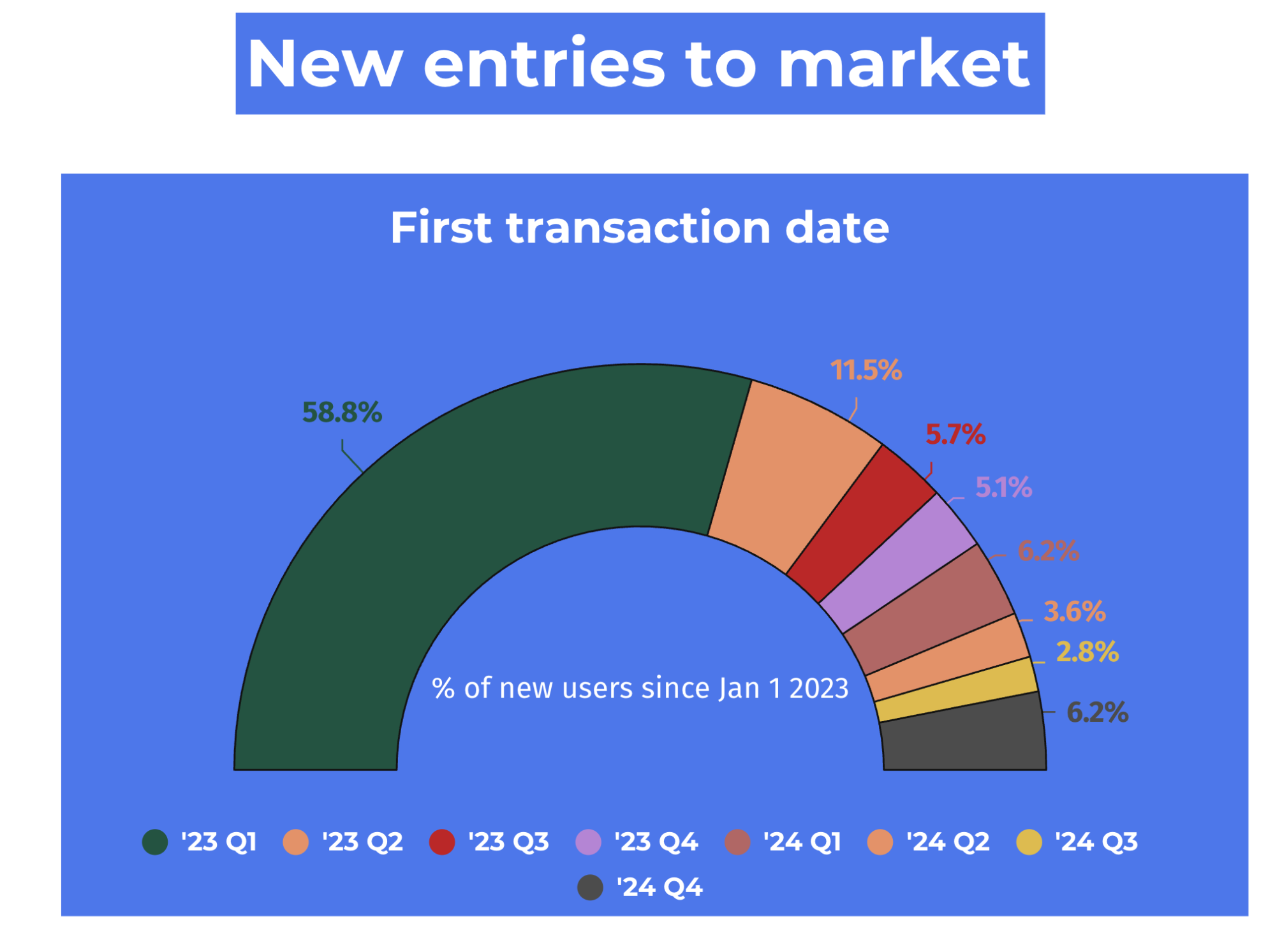
In Q4 2024, only 6.19% of the active base were truly “new” players (inactive for at least 2 years).
At the same time:
- ~59% are long-term active users
- the core of the market = existing audience
Even with a softer definition of “new users”, the trend is still negative:
- 14.57% → 10.7% YoY decline
👉 Translation:
This is not real growth — it’s just reactivation and redistribution.
What It Means for the Market 🎯
The market is not expanding through new players.
It’s fighting over:
- existing users
- retention
- reactivation
- share of wallet
If your strategy is based only on acquisition, you’re basically paying to redistribute the same pool of users 💸
Long-Term Retention: Stable Core, Not a Collapse 📊
No “Market Death” — Just Slow Erosion 🧠
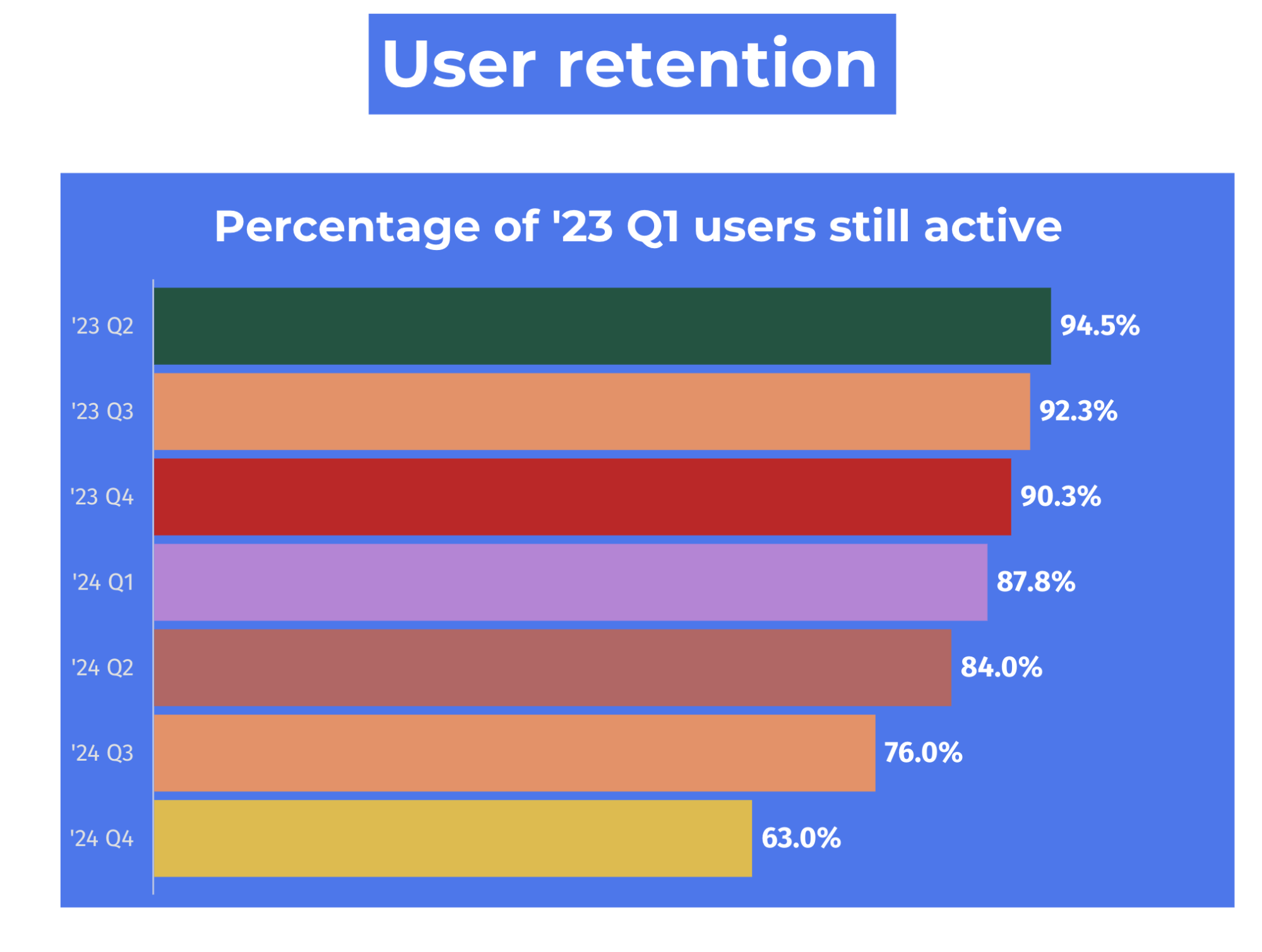
If we take players active in Q1 2023:
By Q4 2024:
- 63% are still active
- total churn = ~37% over 2 years
That’s about:
👉 ~1.5% churn per month
This is NOT a crash.
This is:
- slow erosion
- stable demand structure
- no mass exit
The Real Bottleneck Is the First Year ⚠️
Here’s the key insight:
The problem is not retaining old players.
The problem is converting new players into long-term ones.
If a player survives the first year:
👉 retention probability increases significantly
New Users: Where the Real Loss Happens 💥
First Drop Happens Almost Immediately 📉
Looking at players who made their first deposit:
- ~30% drop after the first quarter
- ~65% stop playing within a year
Only about:
👉 1 out of 3 becomes a regular user
The rest:
- one-time users
- bonus hunters
- or people who didn’t see enough value to return
The Core Issue Is Product Fit 🔍
This is not about “bad users”.
It’s about:
- weak onboarding
- lack of engagement
- no behavioral integration
If retention logic is not built in from day one:
👉 marketing just accelerates churn
Welcome bonuses bring users in…
but they don’t keep them.
The Real War: Share of Wallet 💰
The study shows a major shift:
- ~60% of users interact with 4+ operators per quarter
- only ~20% stay loyal to a single brand
👉 Loyalty is no longer the default.
Multi-account behavior = standard.
More Activity ≠ More Profit for One Operator 📊
Important pattern:
The more platforms a user engages with:
👉 the more they spend overall
But:
They don’t concentrate spend in one place.
They spread it across multiple operators.
That’s where real competition happens.
👉 Not for users
👉 but for their wallet share
Final Takeaway 🔥
So what do we actually have?
- no market collapse ❌
- no massive user inflow ❌
- strong churn in the first year ⚠️
- stable long-term core ✅
- heavy competition for wallet share 💰
The market is not growing through new users.
It’s redistributing money between operators.
Players:
- open multiple accounts
- split budgets
- test platforms
👉 The winner is not the one who attracts users.
👉 The winner is the one who keeps them and builds value over time.
And yes — even if the market grows ~5% per year,
competition will eat that growth fast ⚔️